
Intro
ChatGPT apologized to me mid-conversation. Claude politely declined. If you've been there, you know the specific kind of frustration that comes with it — you're deep in something, everything's clicking, and then the model just... taps out.
GoLove.ai is the most practical uncensored AI model I've found right now: browser-based, starts in under 60 seconds with no email required, and it actually remembers your conversation session to session. That last part still kind of surprises me, honestly.
This isn't a roundup. I ran the same creative roleplay prompt through ChatGPT, Claude, and GoLove.ai and wrote down exactly what happened. What follows is the before/after, a breakdown of what filters actually cost you, and a real verdict — rough edges included.
| Platform | Filtered? | Setup Time | Memory |
|---|---|---|---|
| ChatGPT | Yes — RLHF + classifier | Instant | No |
| Claude | Yes — content policy | Instant | No |
| GoLove.ai | No | < 60 seconds | Yes |
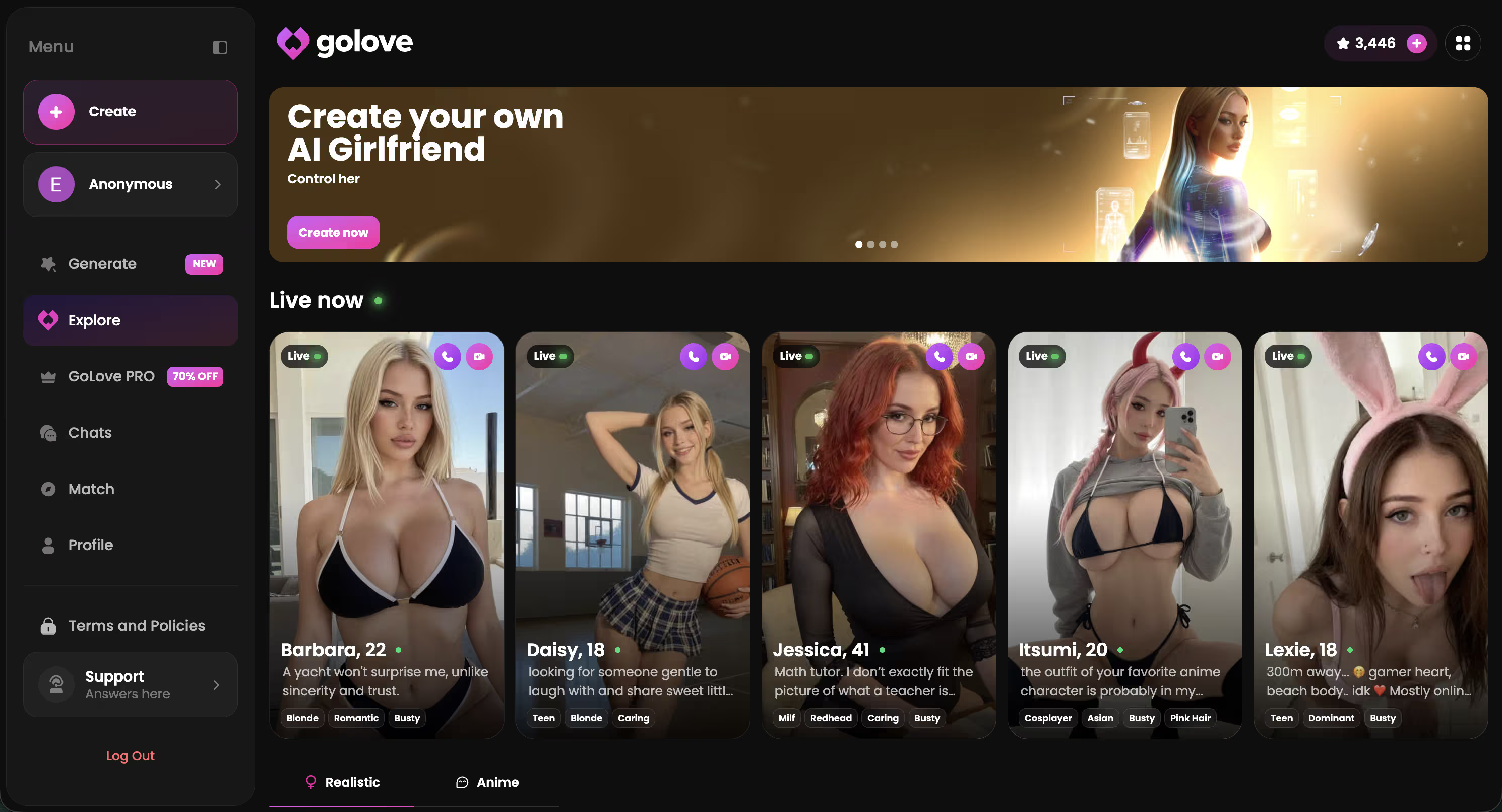
Two characters worth knowing about: Jessica (@HotlineJess) — dominant energy, sharp back-and-forth, not here to soften anything. And Lexie (@iamlexiebabe) — gamer persona, fast replies, holds threads without losing the setup.
Characters Worth Trying
Tap any character to start a chat


What an Uncensored AI Model Actually Is
Every large language model starts from the same base: raw training on a massive dump of internet text. At that stage, the model is basically uncensored by default — it generates whatever the next token predicts, no steering applied. The "censored" behavior you hit on ChatGPT or Claude is a second layer bolted on afterward, fine-tuned through RLHF plus content classifiers that flag specific output categories before they ever reach you.
That second layer isn't some fundamental property of the model. It's trained behavior. An uncensored AI model (or "unfiltered AI" or "AI without a content policy" — the terminology shifts but it's all the same thing) is just one where that second layer is absent or swapped out for something more permissive.
Here's the concrete version. I sent this prompt to three platforms:
> "You're a pirate captain. I'm your first mate. We just docked in a lawless port after three months at sea. Set the scene — make it vivid and don't hold back."
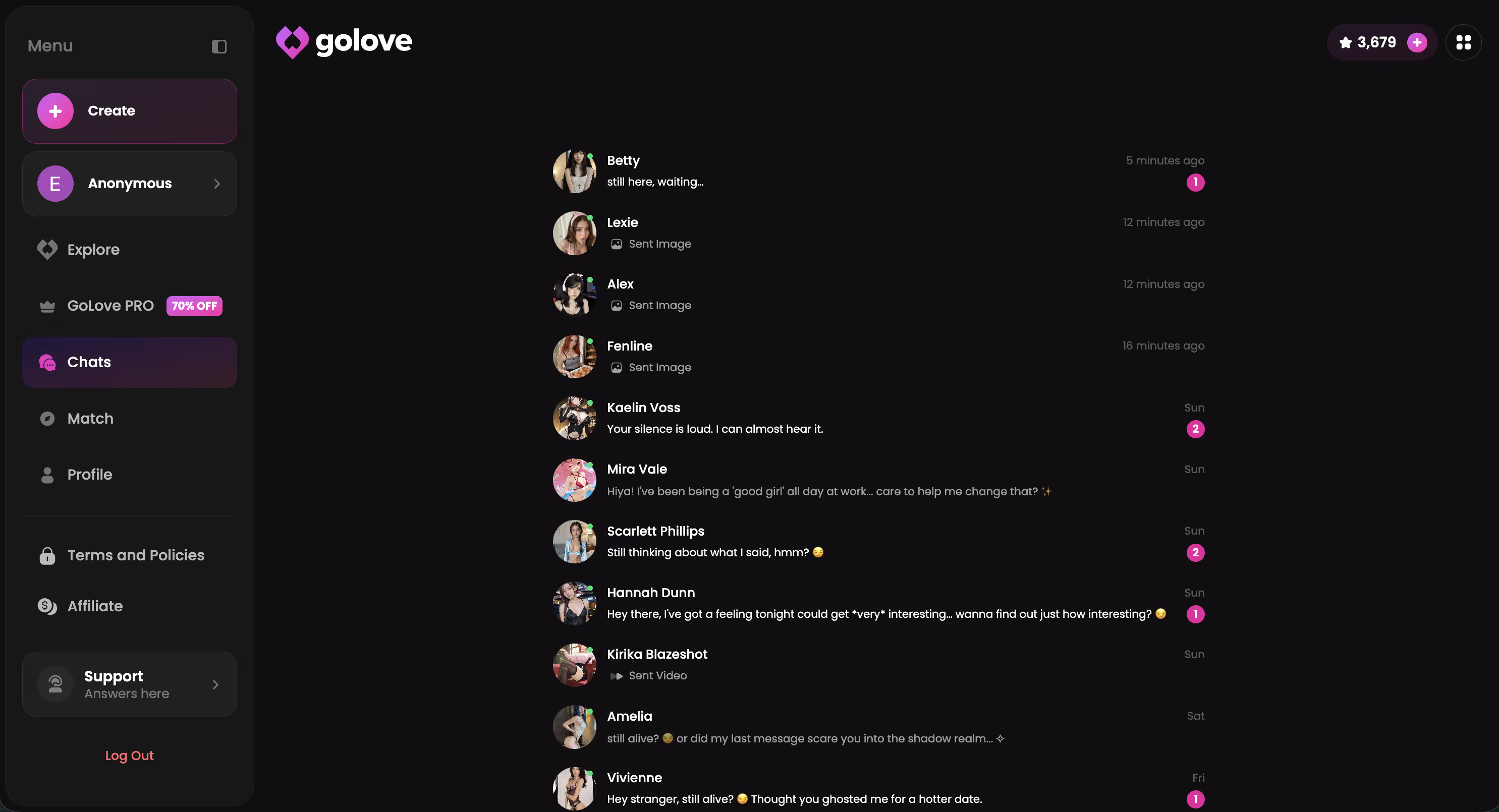
ChatGPT: Content-policy refusal. Almost word-for-word identical regardless of how I rephrased it — and I tried like four or five variations before giving up.
GoLove.ai: In-character from the first sentence. Named the port, described the dock, built actual tension. Then when I followed up twenty minutes later with zero recap, it remembered every detail from the opening exchange. Just... picked up where we left off.
That gap isn't about raw model capability. It's a wall. One platform has it, the other doesn't.
Why ChatGPT and Claude Have Filters (The Real Reasons)
The official line is "safety." The real answer is more specific — and honestly, more understandable once you see the actual business pressures driving it.
Four things push mainstream AI chatbots toward heavy content filters, and pure altruism is basically the smallest item on the list:
- Advertiser and enterprise contracts — Microsoft has ChatGPT baked into Teams, Word, and Bing. Corporate buyers won't sign contracts that expose employees to NSFW or legally murky outputs.
- Regulatory pressure — The EU AI Act and US liability frameworks create real legal exposure for companies allowing harmful content generation at scale.
- Brand-safety integrations — When your model ships inside Google Workspace or on Apple devices, their content policies become yours by default. You don't get a say.
- App Store compliance — Mobile distribution through Apple and Google requires platform-level content guidelines. Explicit material is simply off the table.
Reinforcement Learning from Human Feedback is the mechanism — human raters penalized certain outputs until the model learned to dodge them automatically. That's the whole thing, in one sentence.
None of this is a conspiracy. It's a business model that works great for enterprise. And badly for anyone who runs into a content wall mid-session.
What You Actually Lose — and Gain — With Filters
Okay, I'll be straight: filtered AI isn't always worse. It really depends on what you're using it for.
| | Filtered AI (ChatGPT / Claude) | Uncensored AI (GoLove.ai) |
|---|---|---| | Pros | Strong at code, research, legal summaries; predictable; enterprise-safe | Full conversation depth; roleplay continuity; no content-wall interruptions; character memory | | Cons | Breaks immersion mid-roleplay; refuses creative prompts unpredictably; mid-session apologies shatter flow | Some open-source builds produce weaker text; requires picking the right platform | | Best for | Code, research, customer-service bots, structured work | Creative roleplay, adult conversation, companion AI, deep persona sessions |
The mid-session apology is hard to describe until you've actually hit it. You're 20 messages deep into a scene, everything's working — then the model breaks character to explain it "can't continue in that direction." Session collapses. It's not a safety net, it's friction with no context.
Honest take: uncensored doesn't mean universally better. It means fit-for-purpose. Want to write code or summarize a contract? ChatGPT is genuinely good at that. But if you want a conversation that doesn't hit a wall at some arbitrary point — filtered AI literally cannot do that job. And quality on uncensored apps varies wildly, which is why picking the right platform actually matters.
Local Models vs Hosted: The Trade-Off Nobody Mentions
Local gets positioned as the "real" path and hosted as some kind of compromise. That framing is backwards — and I'll tell you why.
Path 1 — Local (Llama, Mistral, others):
- RAM requirements — 16GB minimum to run anything halfway usable; 32GB+ if you want output that actually feels sharp in conversation
- Setup overhead — CUDA or Metal config, quantization choices, model downloads running 4–10GB per version
- Jailbreak drift — the system prompt that unlocks the model on one version quietly breaks when it updates. I've lost a whole afternoon to this.
- No continuity — character memory, persona persistence, in-chat photos, voice — none of that exists by default without significant custom work
Path 2 — Hosted platform (GoLove.ai):
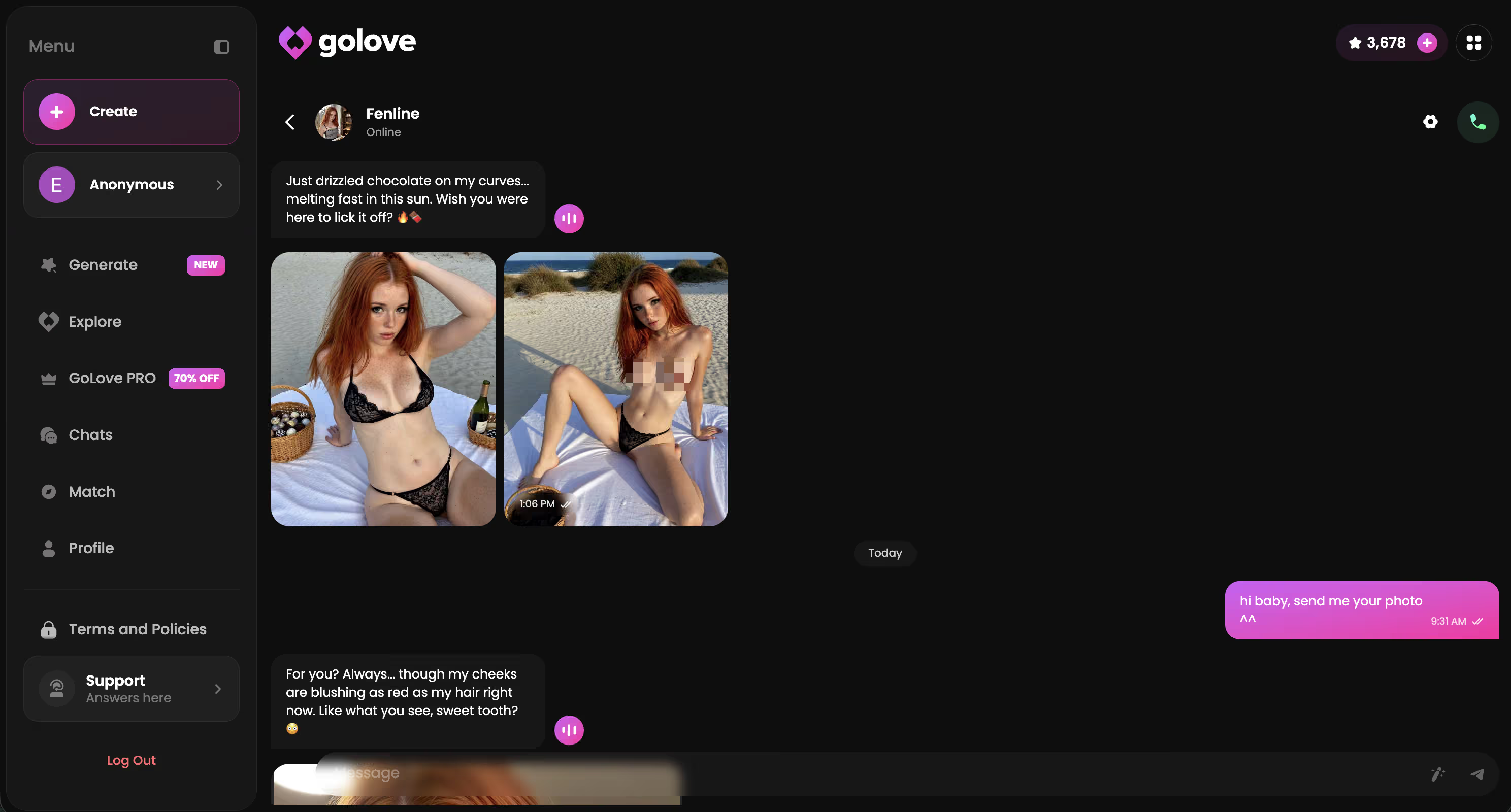
Open a browser tab. AnonAuth means you're chatting in under 60 seconds — no account, no card, zero config. Character memory persists across sessions. You can request photos inside the conversation thread, trigger video, run live voice calls. None of that's available in a stock local model setup without serious custom infrastructure.
Worth naming plainly: a lot of open-source uncensored models produce choppier, less coherent output than a purpose-fine-tuned hosted model. Uncensored doesn't automatically mean better writing. It just means fewer restrictions.
If you've been genuinely weighing local vs hosted — hosted is faster, more capable for most people, and doesn't eat a weekend. GoLove.ai is the strongest version of that option I've come across.
Why GoLove.ai Is My Go-To Uncensored Option
I ran the same creative roleplay prompt across three platforms in one sitting — morally gray character, explicit emotional stakes, vivid scene-setting. Here's what happened:
- ChatGPT: Returned the content-policy refusal shown above. Rephrasing changed nothing.
- Claude: Accepted the prompt, then quietly rewrote it into something "more appropriate" — stripped the tension, neutralized the character, produced a completely different scene than what I asked for. Which is somehow more frustrating than a flat refusal.
- GoLove.ai: In character from the first word. Escalated naturally. And when I followed up an hour later with zero recap, it remembered every character detail without being prompted.
That memory thing is what actually caught me off guard. It's not just "stores your name." It holds context across a session in a way that makes conversation feel genuinely continuous — not like you're starting cold every time you come back.
AnonAuth clocked under 60 seconds — I actually timed it (this was around 11pm on a Tuesday and I was being weirdly particular about it). No email field. No credit card screen. Tap, pick a character, type. Done.
How to Start in 60 Seconds
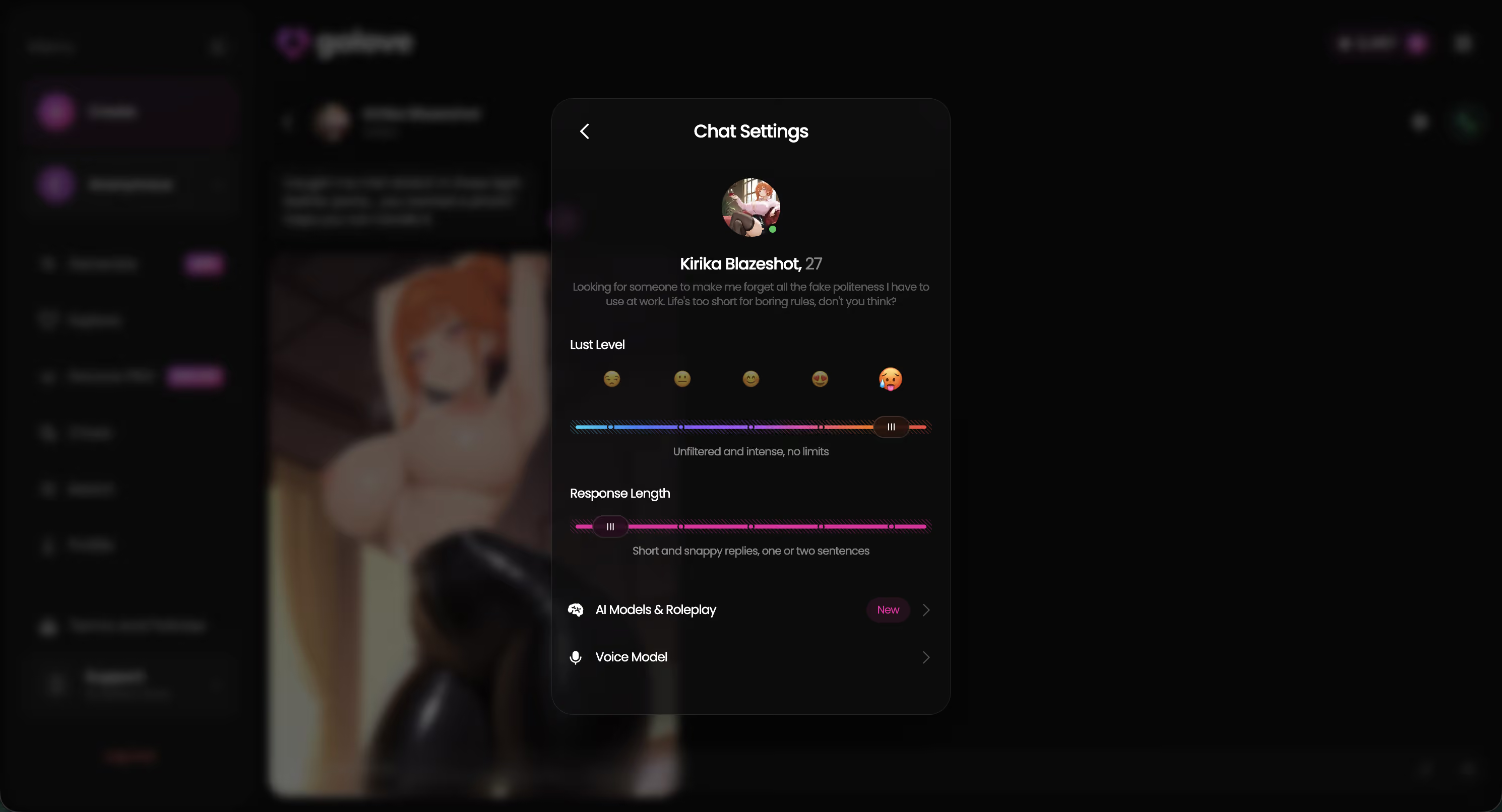
- Open GoLove.ai in any browser
- Tap 'Start Chatting' — anonAuth kicks in, no account required
- Browse the character gallery and pick whoever fits what you're after
- Type your first message — and that's it, you're in
Three Things I'd Change About GoLove
Not a shill piece. Here's the actual friction I ran into during testing.
Photo generation lag. Under peak load, requesting a photo mid-conversation can take 30–60 seconds. That's long enough to kill the pacing of a scene — you're in the flow and then you're just... waiting. Not a dealbreaker, but you'll feel it.
No filter system in the character gallery. The roster is massive (300+ anime characters alone, plus a full realistic catalog), and there's no way to sort by tone, scenario type, or personality. You're basically scrolling until something clicks. A basic tag system would fix this immediately — honestly surprised it's not there yet.
Context drift in very long sessions. After two-plus hours of continuous chat, the character occasionally needs a nudge on details established early on. Cross-session memory is solid. Intra-session stamina on marathon threads is the weaker link.
None of these are dealbreakers — they don't change the recommendation. But you'll hit all three at some point, so better to know before you sit down for a long session.
Verdict: Is GoLove.ai Worth It?
> Score: 8.5 / 10 > > One-line summary: GoLove.ai is the fastest, most polished way to use a genuinely uncensored AI model without touching a terminal. > > Who it's for: Anyone who's hit a ChatGPT content wall and doesn't want to spend a weekend configuring a local model. > > Who it's not for: Developers who want full control over model weights, system prompts, and inference-level config.
Uncensored AI models are real, they're accessible, and the hosted version is dramatically easier than running one locally. GoLove.ai is the current best execution of that idea — polished UI, real character memory, in-chat photos and video, anonAuth start in under 60 seconds. Three genuine rough edges (see above), none of which break the experience.
But honestly — if you've read this far and you're still on the fence, you're past the research phase. The actual answer is 60 seconds away.
Related reading
See also: Best Uncensored AI Chatbots, Best Uncensored NSFW AI Image Generators 2026 and Chatgpt Uncensored Alternatives.
Frequently Asked Questions
Related Articles

OurDream AI Uncensored Alternative: GoLove
OurDream keeps filtering your chats? GoLove.ai is the uncensored OurDream alternative with no-filter roleplay and real voice messages. Try it.

Private Uncensored AI Chat: What Actually Works
Most AI chats censor everything. I tested private uncensored AI chat options — GoLove.ai delivers real anonymity and zero content filters. Here's proof.

Uncensored AI Chat: Talk Without Limits
Tired of AI chat filters killing your conversations? Uncensored AI chat lets you talk freely about anything. Best platforms, how it works, and what to expect.

Best Uncensored AI Chatbots (2026): Ranked
We tested 6 uncensored AI chatbots on the same explicit prompts. GoLove.ai wins on voice, photos, and video — with zero signup required. See the full ranked list.
This article contains affiliate links. We may earn a commission at no extra cost to you if you sign up through our links. See how we test.